


Albania is often described as one of Europe’s most religiously tolerant countries, but that reputation did not appear overnight. Shaped by centuries of shifting empires, belief systems, and political ideologies, Albanian religious culture is deeply intertwined with national identity, resilience, and coexistence. Christianity arrived early, Islam spread during the Ottoman era, and all faiths endured decades of suppression during the communist period, when Albania declared itself the world’s first officially atheist state.
Today, religious life has re-emerged not as a source of division, but as a quiet reflection of history and shared values. Visiting Albania’s sacred sites is less about strict devotion and more about understanding how faith, culture, and survival intersect. The following four sites offer a powerful introduction to Albania’s religious heritage, each representing a different layer of the country’s spiritual story.
1. Et’hem Bey Mosque (Tirana): Faith at the Center of Public Life
Located in Skanderbeg Square, the Et’hem Bey Mosque stands at the symbolic heart of Albania’s capital. Built in the late 18th and early 19th centuries, the mosque reflects the Ottoman influence that shaped much of Albania’s religious and architectural landscape.
What makes this mosque especially important is not its size, but its survival. During the communist era, religious practice was banned, mosques and churches were closed, and clergy were imprisoned or executed. Et’hem Bey Mosque was shut for decades, yet it remained physically intact. In 1991, as communism collapsed, thousands of people gathered here for the first public prayer in a generation — a quiet but powerful act of reclaiming religious freedom.
Inside, the mosque’s frescoes are unusually detailed, depicting trees, waterfalls, and landscapes rather than purely geometric designs. These natural motifs reflect a softer, more localized interpretation of Islamic art. Visiting Et’hem Bey offers insight into how Islam in Albania developed alongside local traditions, rather than replacing them.
2. Orthodox Autocephalous Cathedral of the Resurrection (Tirana): Renewal and Identity
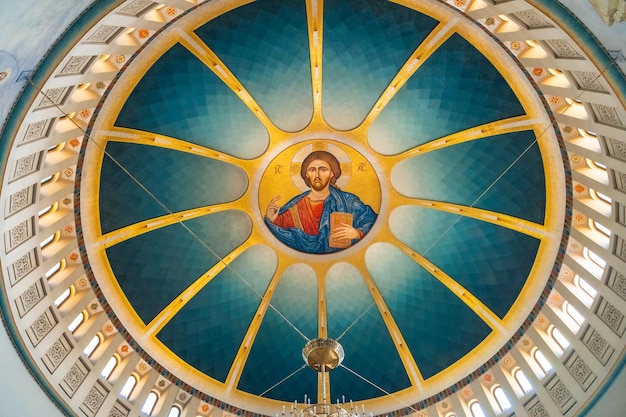
Just a short walk from Et’hem Bey Mosque stands the Orthodox Cathedral of the Resurrection, one of the largest Orthodox churches in the Balkans. Completed in the 21st century, the cathedral represents not ancient continuity, but rebirth.
Orthodox Christianity has deep roots in southern Albania, dating back to early Christianity in the Roman and Byzantine periods. However, decades of state atheism nearly erased visible Orthodox life. The construction of this cathedral after the fall of communism symbolized the return of faith and the reassertion of Albanian Orthodox identity.
Architecturally, the cathedral blends traditional Orthodox elements with modern design. Its clean lines, large dome, and contemporary materials reflect Albania’s forward-looking approach to religion — respectful of tradition without being trapped by it. Inside, iconography follows Orthodox conventions, yet the atmosphere feels open and welcoming rather than imposing.
The cathedral is also a cultural space, hosting concerts and public events. This dual role highlights an important feature of Albanian religious life: sacred spaces often function as places of community rather than strict separation.
3. Ardenica Monastery (Central Albania): A Christian Sanctuary Through Empires
Set atop a hill overlooking fertile plains, Ardenica Monastery is one of Albania’s most historically rich Christian sites. Founded in the Middle Ages, the monastery has survived Byzantine rule, Ottoman domination, and communist repression.
Ardenica is especially significant because it represents continuity. While many religious institutions were destroyed or abandoned over time, this monastery endured, albeit quietly. Its location — secluded but not isolated — allowed it to function as a place of learning and worship for centuries.
Inside the Church of Saint Mary, visitors find frescoes painted by renowned Balkan artists. The artwork blends religious themes with local influences, showing saints dressed in regional styles and faces that feel distinctly human. This personalization reflects how Christianity in Albania adapted to local culture rather than existing apart from it.
The monastery is also linked to Albanian national history. It is believed that the national hero Skanderbeg was married here, connecting religious heritage with the broader story of Albanian resistance and identity.
4. Bektashi World Headquarters (Tirana): Spirituality, Tolerance, and Mysticism
One of Albania’s most unique religious traditions is Bektashism, a Sufi Islamic order known for its emphasis on spirituality, equality, and tolerance. The Bektashi World Headquarters in Tirana is not only the global center of the order, but also a powerful symbol of Albania’s inclusive religious culture.
Unlike more orthodox forms of Islam, Bektashism incorporates elements of mysticism, poetry, and symbolic ritual. It has historically welcomed people of different backgrounds and promoted harmony between faiths. This philosophy resonated strongly in Albania, where religious identity often took a back seat to shared language and culture.
The complex itself feels peaceful rather than formal. Visitors are often welcomed with tea and conversation, reflecting the Bektashi emphasis on hospitality. Shrines, portraits of spiritual leaders, and quiet courtyards invite reflection rather than strict observance.
During the communist era, Bektashi leaders were persecuted, and many tekkes were destroyed. The survival and revival of the order after 1991 stands as a testament to Albania’s spiritual resilience and its commitment to religious coexistence.
Religion and Coexistence in Albanian Culture
What unites these four sites is not theological similarity, but shared history. Albania’s religious culture is defined less by doctrine and more by experience: centuries of foreign rule, shared hardship, and enforced silence under communism.
Today, it is common to see mosques, churches, and tekkes standing within minutes of each other. Interfaith families are not unusual, and religious holidays are often respected across communities. This coexistence is not performative — it is practical, shaped by the understanding that identity in Albania has always been layered.
Religion here is personal rather than political, cultural rather than confrontational.
Tips for Visiting Religious Sites in Albania
-
Dress modestly, especially when entering mosques and monasteries.
-
Photography is usually allowed, but always observe posted signs.
-
Be respectful of prayer times and ceremonies.
-
Engage in conversation when invited — Albanians are often eager to share their history.
Final Thoughts
Exploring Albania’s religious sites offers more than architectural beauty or historical facts. It reveals how faith survived suppression, adapted to cultural realities, and re-emerged as a quiet force for unity rather than division.
By visiting the Et’hem Bey Mosque, the Orthodox Cathedral of the Resurrection, Ardenica Monastery, and the Bektashi World Headquarters, travelers gain a deeper understanding of Albania’s past — and a clearer picture of why religious tolerance is not just an ideal here, but a lived reality.
In Albania, religion tells a story not of conflict, but of endurance.